
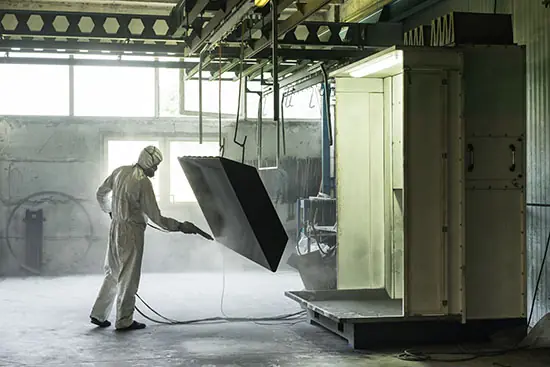

Before the application of paint and other coating materials, Steel-Glass-Wood-Marble surfaces should be prepared and pore-opening process should be performed by “sandblasting process”. The iron ore that comes out of the soil is shaped and turned into metal. Unprotected (uncoated) metal takes a lot of effort to get it back to its original state. Metals rust and rot due to contact with water and oxygen both in the air and in the environment, that is, corrosion occurs on the metal. Factors known to be affected in the process before the metal is protected, namely plating; the presence of rust and slag on the surface, the presence of dirt on the surface such as salt, dust, grease and oil, and the profile of the surface.
Before applying paint, it is prepared for cleaning the surface by sandblasting, opening pores on the entire surface of the metal, and applying the surface, paint and other protective materials by spraying steel granules, grit at high pressure. Steel granule – grit blasting in international standards, while cleaning the surface, a substructure (pore) is created so that the paint can hold.
In general, it is the process required for surfaces that have been previously painted and corroded over time, and that need to be repainted due to acid and similar corrosive reasons in the environment. All painted metals are subject to metal fatigue over time, and the paint removed from the surface is corroded and corroded by the penetration of water under the paint. Such surfaces ensure that the metal is as solid as the first day by removing the paint completely. For this reason, sandblasting is needed. During sandblasting, after the paint on the metal is completely removed, it should go down to the surface. Since the surface has been sandblasted before, there are pores. After sandblasting, the metal will be as strong and durable as the first day with the application of primer, undercoat and topcoat.
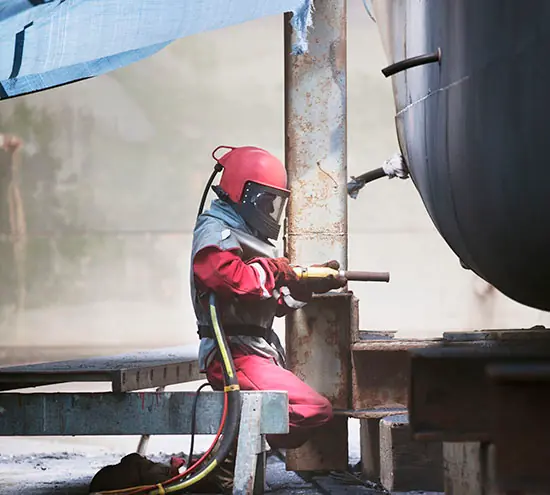
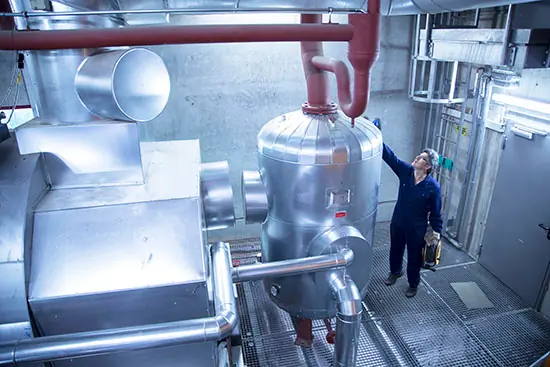
Painting applications are applied with micron, especially epoxy and polyurethane. Many products left in the open area are painted with these paint types. There are 5 types of paints: Acrylic, Epoxy, Cellulose, Synthetic and Rapid.
Painting application in structural steels is completed with shop primer primer, intermediate coat primer and top coat paint after sandblasting. Between these layers, the first layer is 20 micron, the second layer is 100 micron, the third layer is 100 – 150 micron paint application.
In general, it is the type of metal used in places such as hydroelectric dams with thick metal wall thickness and are metals with more importance to protect. Since the metal thickness is high and it is used to evacuate acid, water and similar liquids in usage areas, paint application will be slightly different in such places. (For penstocks and heavy metals) In penstock pipes, a sandblasting norm of h/2.5 should be applied and a pitch-component zinc or zikrinc primer should be applied instead of the primer shop primer, even this primer alone should not be less than 150 microns in average. This primer, which is between 150-250 microns, should be between 200-250 microns for the second coat, and the top coat should be in the specified color and the thickness should be between 250-300 microns. In total, it should be between 600-900 thicknesses. In addition to these applications, the paint viscosity to be used should be at least 60 p.
Paint application with air spray: Using compressed air, the paint is sprayed on the metal surface in powder form with a gun. Thus, a very smooth film layer of desired thickness is obtained. However, up to 30-40% dye loss occurs during this process. This loss varies with the wind and the shape and form of the metal being painted.
Paint application with airless spraying: Only the paint material is sprayed through a fine hole with a very high pressure. Thus, the paint particles adhere to the metal surface as very small particles. With this method, a thick film layer is obtained in a short time. However, the application must be done by a skilled worker. Otherwise, the paint layer thickness may vary from place to place. On the other hand, applying paint with an airless gun has the following advantages. The paint adheres better to the surface as it is sprayed with pressure. The thicker paint layer can be applied in one coat. Thicker viscous paints can be easily applied with this method without the need for thinning.
Epoxy floor applications are of several types, mainly divided into three as floor covering, floor painting, self living. This application, which has been in demand in recent years, has eliminated the pollution caused by the joints between the tiles and the tiles, and has also been a solution to the complaints coming from cracked and broken slabs, tiles and wet floor materials. Since it covers the entire floor without interruption, there can be no bacteria that can form under the floor. Generally, hospitals, cafeterias, parking lots, showrooms and shopping centers are application areas. In recent years, many applications show differences. Epoxy floor applications can be applied in the desired color and pattern.
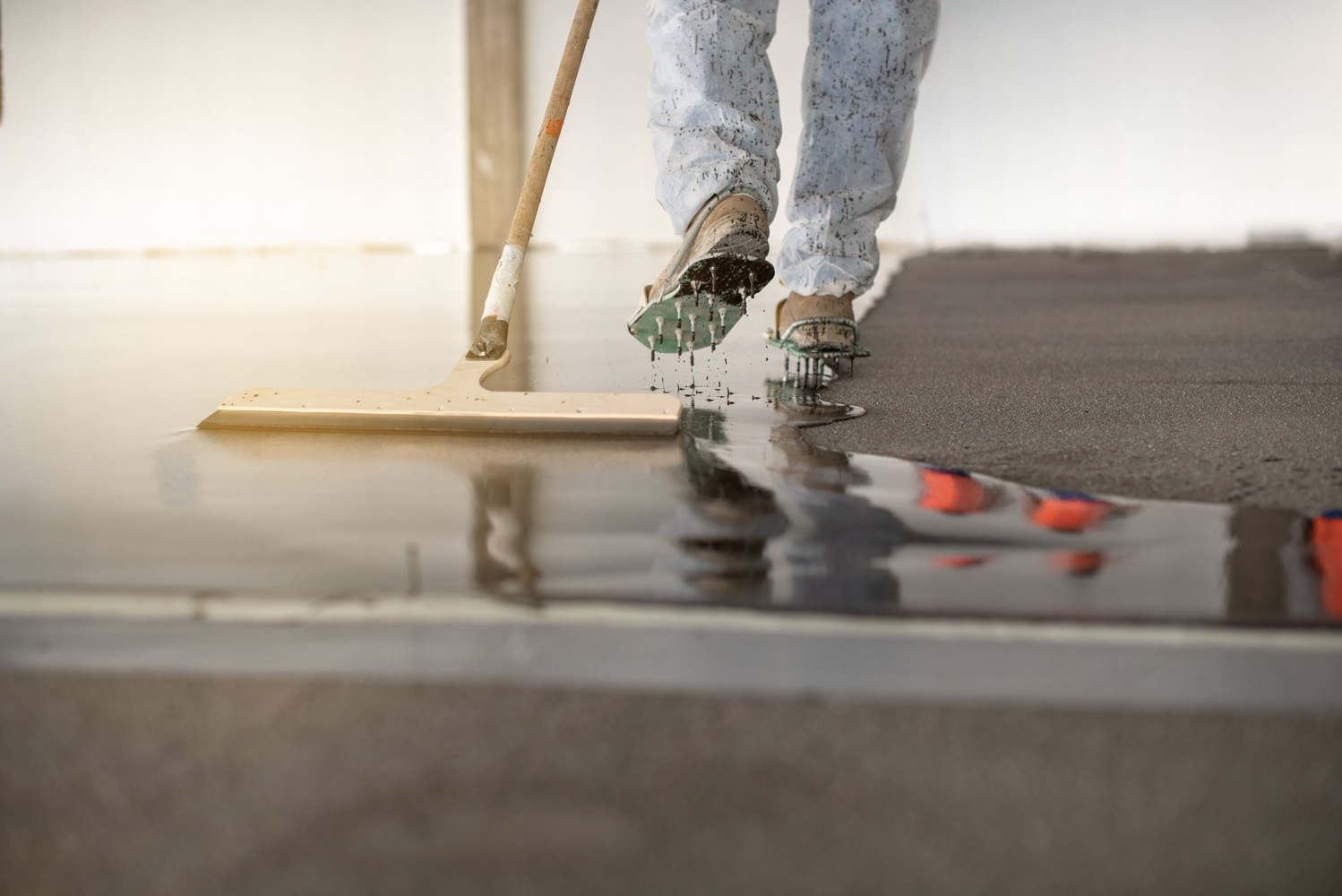
As a method of application, after applying a honey-like resin to the surface, the desired thickness is obtained by sprinkling quartz sand after the resin application, according to the desired thickness. The sand, which is sprinkled with an interval of one day, is cleaned from the surface by sweeping the non-adhesive parts. Then about 1 mm with solvent-free epoxy paint. thickness is obtained. This thickness can be increased according to demand and ground conditions.
You can contact us immediately for your problems and all your requests waiting to be solved!
Address
FLORA PLAZA 2702 KÜÇÜKBAKKALKÖY MH. DEFNE SK NO:1 ATAŞEHİR/İSTANBUL (34750)
